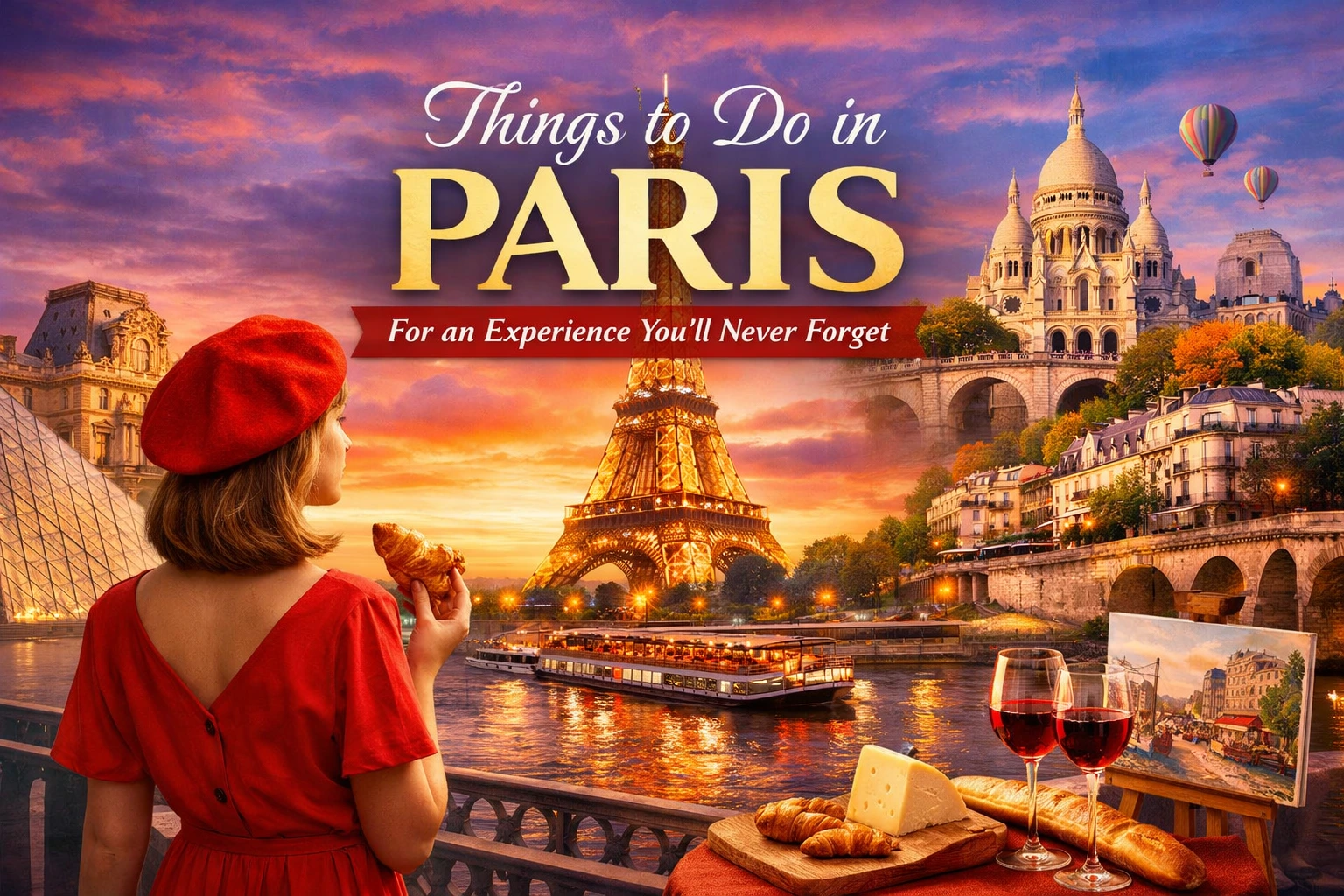

Paris has a funny way of slowing you down - even if you fly in with a jam-packed itinerary and a long to-do list for your visit.
Somewhere along the line - whether it's that first French croissant you actually put in your belly, getting a little turned around in le marais, or chilling by the Seine as boats float lazily by - Paris starts to feel less like a trip and more like a way of life. You'll end up walking a lot more than you'd ever planned, eating a lot more food than you ever expected, and before you know it, you'll be sitting at a charming café doing absolutely nothing - and loving every minute of it.
This guide isn't about ticking off famous landmarks or big-name tourist spots - it's about showing you how to really experience Paris, with a clear head and a realistic attitude. We'll cover the iconic sights like the Eiffel Tower, the Louvre Museum, and Notre Dame - but also the hidden neighborhoods and great food that really get people hooked on the city.
Stop — Quick Reality Check Before You Plan Your Paris Trip
If you're flying from the US, the UK, Aus or anywhere else, make sure you get your mobile data sorted before you even touch down. Trust me, it's not worth the stress - this is essential.
In Paris, relying on dodgy public Wi-Fi or scrambling to find a reliable internet connection at a café at the worst possible moment can be a total pain. While loads of places offer free Wi-Fi, the speeds usually crawl along at about 10-20 Mbps and the connections can be patchy - not exactly ideal when you're trying to navigate the Metro or check your next destination on the go.
Get an eSIM before you even board your plane. Your future self will be eternally grateful.
Save yourself a headache:
Sort out an eSIM or local SIM before you even board
For light users (just maps and messaging): expect 3-5 GB a week
For normal travellers (social media, photo uploads and restaurant research): 10-20 GB a week
For heavy users (video calls, streaming and remote work): 50GB+ a week
The Classic Paris Sights You Should Actually Make Time For
Some paris sights are crowded for a reason. These are the places that genuinely live up to expectations—if you do them right.
Eiffel Tower (Especially at Night)
The Eiffel Tower is an engineering marvel - built from 18,000 iron pieces back in 1889. It stands at around 330 meters with its antennae - and around 7 million visitors climb it every year.
But here's the thing nobody tells you: you don't need to go all the way to the top to get the full Eiffel Tower experience.
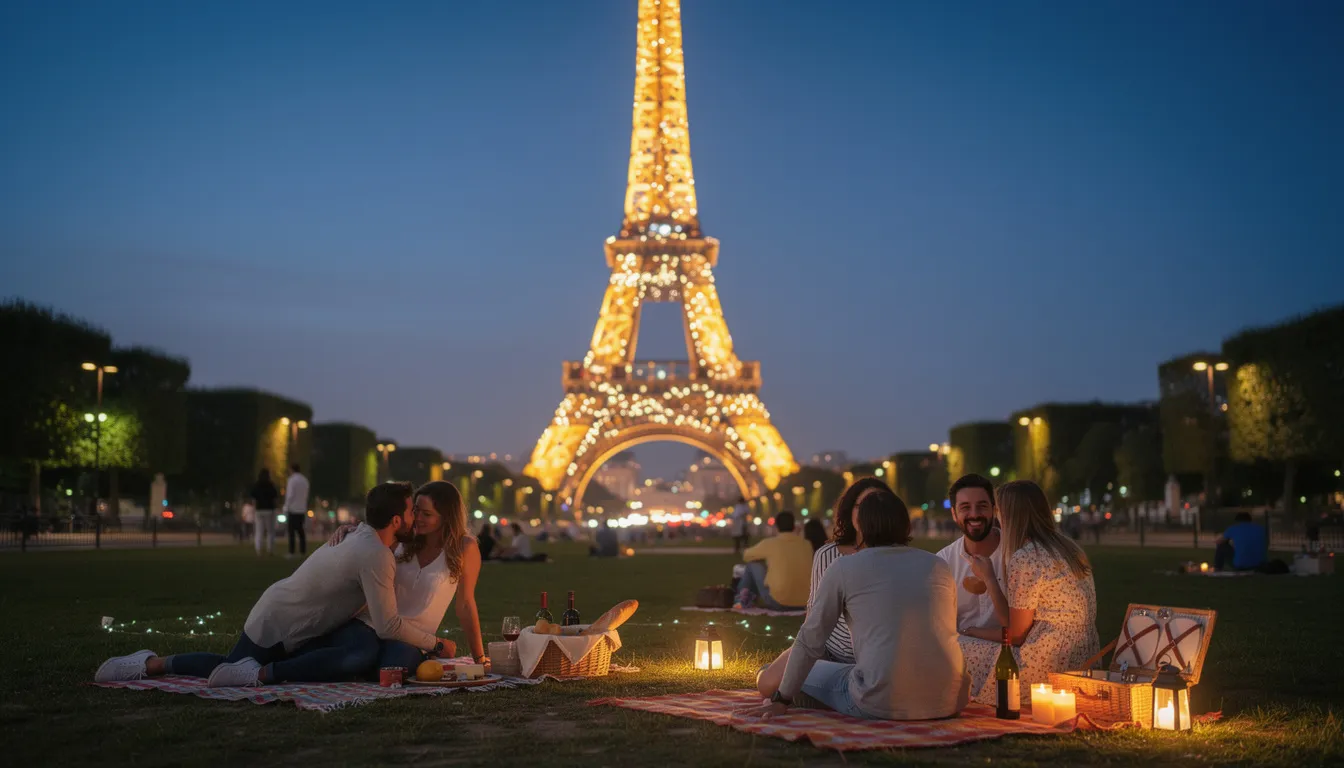
Seeing the Eiffel Tower in photos is one thing. Watching it sparkle in real life - 20,000 bulbs lighting up for five whole minutes every hour after sunset - is something else entirely. Grab a bottle of wine from a nearby Franprix and sit on the grass at Champ de Mars. Wait for the lights to come on. Suddenly, you'll get why millions of people come here every year.
Louvre Museum
The Louvre is the world's biggest art museum - with over 72,000 square meters of galleries, around 380,000 objects in the collection, and roughly 35,000 works on display at any given time.
Don't even try to see it all in one visit. Just don't.
The Louvre is more about the atmosphere - endless corridors, massive ceilings and stumbling on a Greek sculpture that never even crossed your mind. If you try to cram everything into one visit, visitor surveys show you'll be burnt out within two hours.
How to actually get the most out of it:
Pick 2-3 themes to focus on - Egyptian antiquities, Italian Renaissance (hello, Mona Lisa), or French paintings
Realistic timing: 2-3 hours max for first timers
Best times: early morning at 9am opening, or Wednesday and Friday late evenings when it stays open until 9:45pm
Use the Carrousel du Louvre entrance (underground shopping mall) to skip the longest Pyramid queues
Book timed-entry tickets in advance - this isn't optional during busy seasons
After you're done, take a walk through the Tuileries Garden to unwind. Grab some lunch from a nearby café. Your brain needs a break after all that visual overload.
The Louvre also has the Venus de Milo, if Greek sculpture is your thing. But the truth is, wandering around the less famous galleries is often way more rewarding than fighting through the crowds to see the Mona Lisa.
Notre Dame & Seine River Walk
The fire back in April 2019 was a shock to the world. The €846 million rebuild took years, but Notre Dame finally reopened to visitors in December 2024 - with its restored oak spire reaching 96 metersInterior access now requires free but timed reservations (remember to check the current requirements before your trip - its' subject to change) but even just from the outside, walking around the cathedral on Île de la Cité lets you take in the flying buttresses, riverside views and the sheer fame of one of Europe's most famous cathedrals.
This is the place where Paris's rich history all comes together. The island has been continuously inhabited for over 2,000 years.
Make it a walk:
Kick off your day at Notre Dame, take a good long look around the outside of the building - its a big one
Cross over to Pont Neuf and then follow the Seine as it winds past the bouquinistes - those iconic little green bookstalls that have been selling books since the 1800s
Keep going in the direction of Saint-Germain or loop back the other way towards the Latin Quarter - both options have loads to see
Best time to do this one is early evening when the golden hour light and the street musicians are in full swing
If you're into medieval stained glass windows, do yourself a favour and pop over to Sainte Chapelle - 15 of the most amazing windows depicting a whacking great 1,113 bible stories will blow you away even if you've seen a hundred churches before. Its genuinely a must see for any Gothic architecture fan
Musée d’Orsay
If the Louvre feels like a bit too much, then Musée d'Orsay is your answer
Sitting in the former Gare d'Orsay train station - a proper Beaux-Arts masterpiece that opened back in 1900 - this museum is all about Impressionist and post impressionist art: Monet, Renoir, Degas, Van Gogh. Around 3.6 million people come through every year, but at 38,000 sq meters its about half the size of the Louvre so its loads more manageable
The building itself is actually the main event. The big clock windows look out over the Seine and you can still see the railway origins in the architecture - you'll probably find yourself staring up at the ceiling as much as the paintings
Practical approach:
Set aside 2-3 hours for a relaxed visit - don't be in a hurry
Get your tickets ahead of time and arrive at opening or 2-3 hours before closing to avoid the crowds
Far less busy than the Louvre, more focused in its art, and generally easier with kids or if you're feeling travel-weary. Even the museum café under the big clock is worth a visit if just for coffee
Afterwards take a stroll across the river for a leisurely wander through the Tuileries or grab a seat at a nearby café to process what you've just seen. Paris museums are made for taking your time
The Paris Neighborhoods That Feel the Most Real
The best experiences in Paris usually happen when you stop chasing landmarks and start walking charming neighborhoods.
These aren’t secret spots—locals and tourists both know them. But they feel fundamentally different from the immediate Eiffel/Louvre zones. Less performative. More lived-in. This is where you accidentally spend three hours doing nothing you planned.
Where to wander:
place des vosges: Paris’s oldest planned square (built 1605-1612), surrounded by red brick arcades—sit on the grass, people watch, breathe
Rue des Francs-Bourgeois for shopping and galleries
Hidden courtyards off Rue Vieille du Temple (just push open unmarked doors—many lead to secret gardens)
Rue des Rosiers for the best falafel sandwich debate in Paris
Allow 2–3 hours with no rigid plan. Late morning into lunch or late afternoon works best. The neighborhood’s narrow medieval streets photograph beautifully—stone façades, café terraces, locals carrying baguettes.
If you’re doing remote work during your trip, Le Marais has solid working cafés with reliable WiFi. Pretty cool for combining wandering with getting things done.
Canal Saint-Martin
Only a few metro stops from Gare du Nord or République, this one feels like a different city from the central tourist areas.
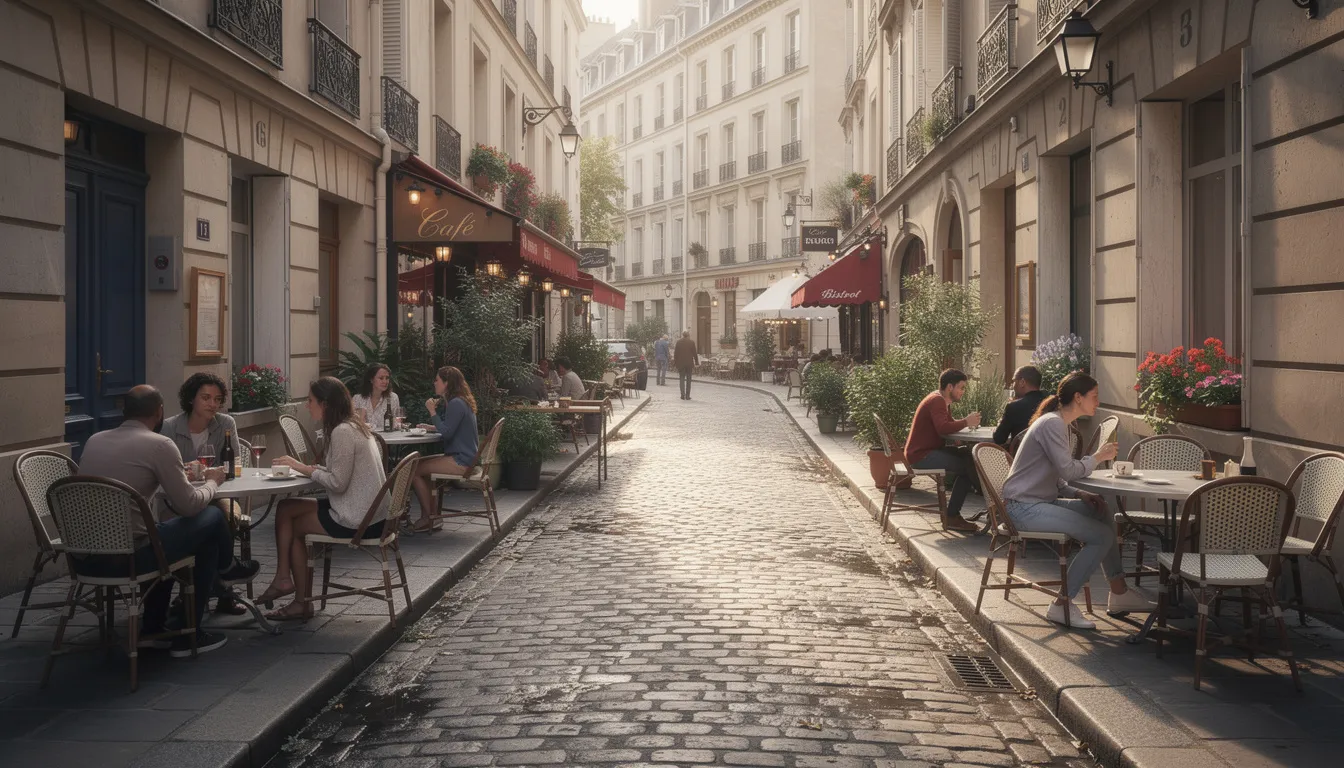
The canal itself - canalsed in 1825 and stretching out 4.5kms with 9 locks - is where Parisians actually hang out. People bring wine and cheese and picnic on the quays - its really idyllic. Iron footbridges create perfect reflection shots at sunset. Locals just sit around and chat for hours
How to experience it:
Try and get there in the late afternoon, especially on a warm evening from May to September
Pick up some takeaway from nearby bakeries or specialist food shops
Walk from Rue de Lancry up towards Bassin de la Villette for the full canal experience* Look for : footbridge crossings, street art and other fancy graffiti, and the occasional lock operation that happens when boats pass through - its’ a nice change of pace from the 70% of tourists that cram into central Paris. Even without a single famous landmark in the area, its still worth checking out.
Montmartre
Perched on the top of Paris's biggest hill (130 meters tall), the 18th arrondissement feels a bit like a village that managed to sneak into the heart of the city without anyone noticing. Streets made of cobbles, artists studios, staircases snaking between buildings, and Sacré-Cœur looming over everything - what's not to love?
In the mid 19th century, artists like Picasso and Toulouse-Lautrec used to live here because the rents were dirt cheap. That kind of bohemian vibe still lingers around, even though the rents aren't so cheap anymore.
Navigating Montmartre:
Arrive via the Abbesses Metro - one of the deepest stations in Paris so you get to take the elevator
Walk up through the side streets to avoid the most crowded tourist routes
Sacré-Cœur Basilica: free entry, and an astonishing 8 million visitors a year can't be wrong. The 83 meter dome is pretty unbeatable for panoramic views of the city
Place du Tertre: its your chance to see a bunch of artists squaring off in a crowded tourist trap - interesting, but leave your camera and wallet safe
The quiet magic: that's what you find in the narrow alleys of Rue des Saules, Rue de l’Abreuvoir and the backstreets behind the basilica
Best time for a visit: try to get there just at sunrise, or right before sunset for super pretty views and some good photography. But watch out for midday - that's when all the tour groups show up, complete with selfie stick chaos.
Oh, and one practical tip: keep an eye on your bags around the basilica and super touristy squares - pickpocketing is a known problem there. Not to panic or anything, just be aware.
The Montmartre neighborhood is one of those places that really comes alive early in the morning, or late in the evening - the in-between hours are pretty much owned by tour groups.
Essential Paris Cafés (and Exactly What to Order - Because You Can)
Paris has over 6,000 cafes. Which one is the best ? That's not really the point. What you should understand is how to navigate the whole cafe culture thing.
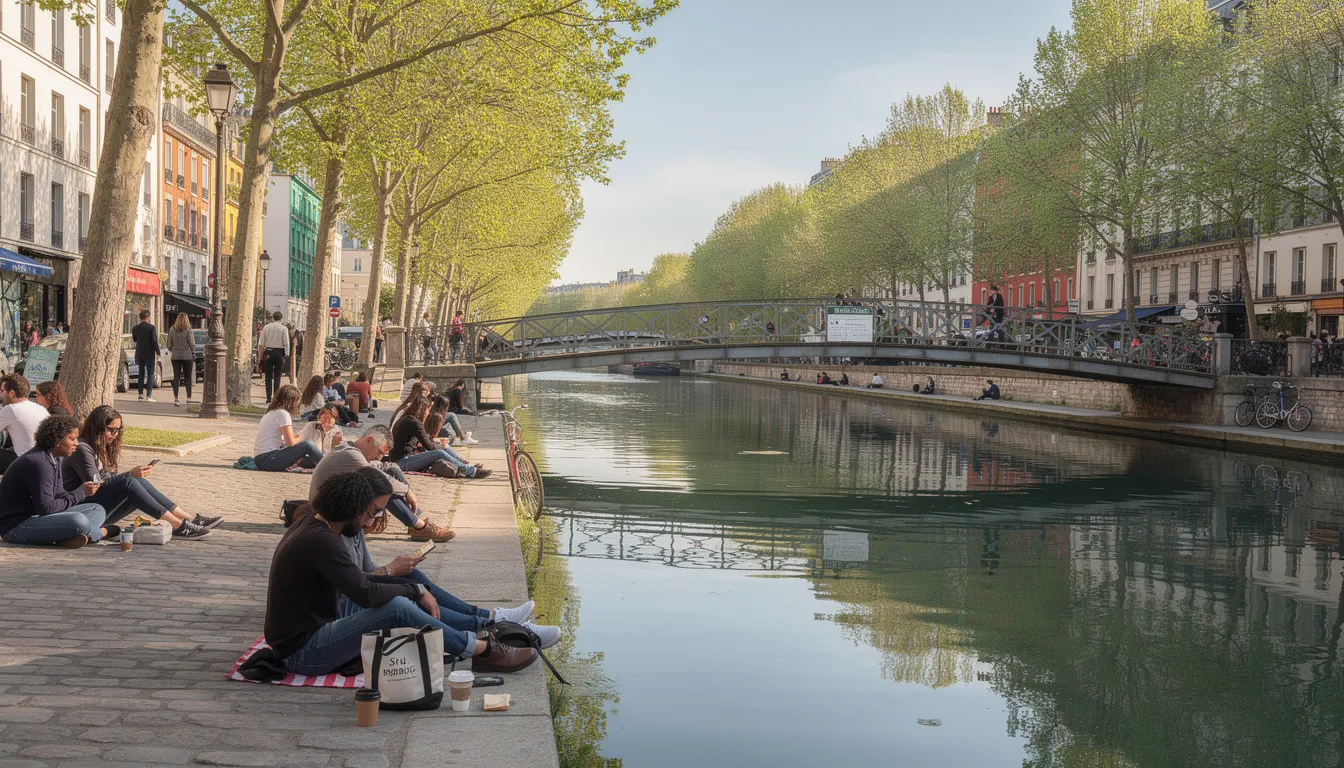
You don't rush in, order one drink and just hang out for an hour if you feel like it. The real action happens on the outdoor terraces - that's where you people watch. If you prefer the indoor room (its quieter but less atmospheric) or you just want to save some cash then the bar seating is the way to go.
Be prepared to pay a little extra for terrace seating - its worth it for the view.
Angelina (Rue de Rivoli, 1st Arrondissement)
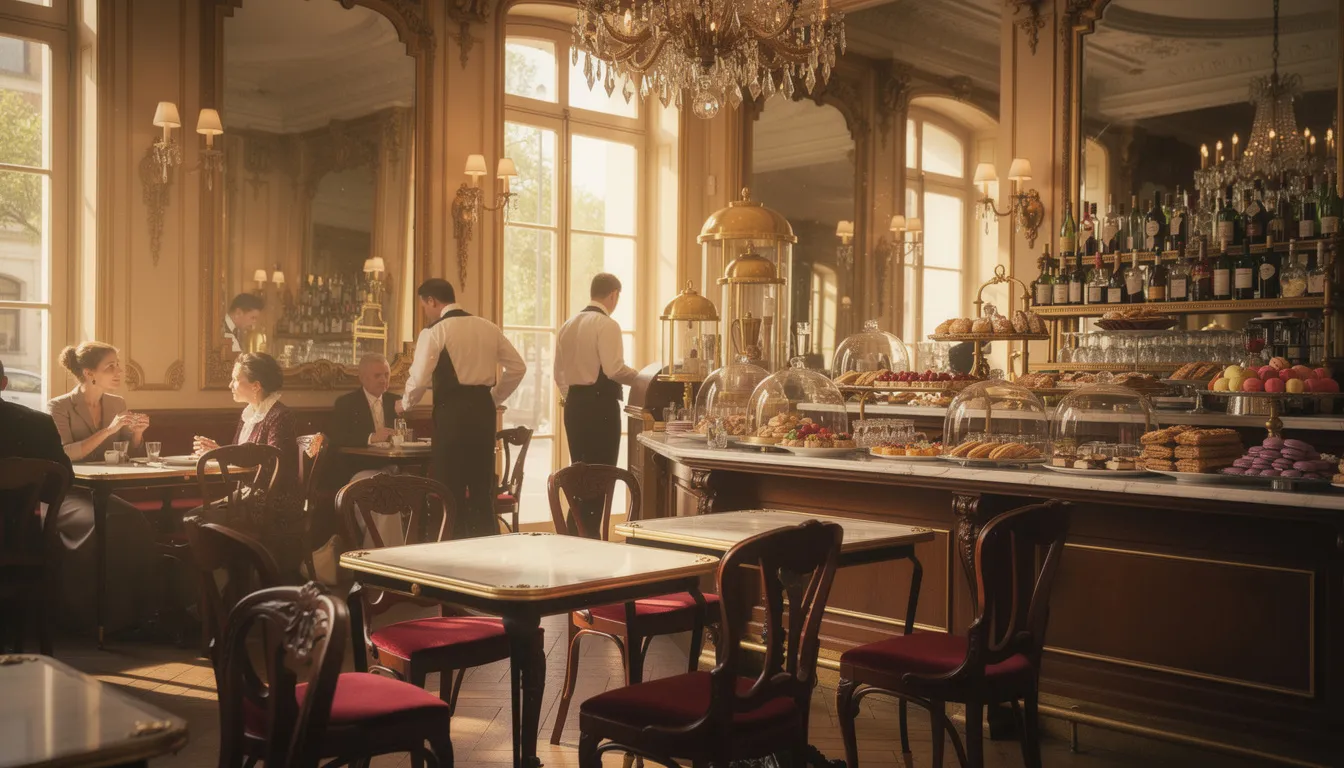
This one has been around since 1903. Located right across from the Tuileries Garden on Rue de Rivoli, Angelina has been offering some of the best - and most decadent - hot chocolate in Paris for over a century.
What to order:
“L’Africain” hot chocolate - it tastes like melted chocolate (around 700 calories, yep its a treat)
Mont Blanc dessert - its a classic - think chestnut vermicelli over meringue
The interior is basically a time capsule from the Belle Époque period - all marble, gilded mirrors and pastry displays that double as artwork.
Timing matters: get there early - just after 7:30 am - to avoid those long queues that go right outside the door. Especially on weekends and school holidays. Pair your visit with a trip to the Louvre or Musée d’Orsay since its right in the middle of both art museums.
Café de Flore (Saint-Germain-des-Prés)
This place has been a hot spot for writers since 1887. Hemingway used to drink here. Sartre and Simone de Beauvoir practically lived here.
What to order:
Café crème - its espresso mixed with steamed milk (around €4.50) - pretty standard
Chocolat chaud if the weather's a bit chilly
Simple tartine (buttered baguette) if you need something light for breakfast
Yeah, the prices are a bit steeper than average. You're paying for the view, the history, and the chance to watch the city go by.
Best times: get there mid-morning after the office rush, or late in the afternoon for an aperitif before dinner. Even in cooler months its worth sitting outside on the terrace - the heaters and blankets will keep you warm, and its quintessential Paris.
Carette (Trocadéro)
Located close to the Trocadéro you'll find Carette - the perfect pre- or post-Eiffel Tower coffee stop, and its way nicer than the generic chains clustered around the tower itself.
What to order:
Macarons - their salted caramel is a standout
Espresso or café allongé if your caffeine levels need a boost
Pastries from the display case, which is almost too pretty to eat
Get there early - either in the morning or late in the afternoon - and the atmosphere is much calmer. Plus you'll get an easier photo session with the Eiffel Tower afterwards on the Trocadéro esplanade. Plus - polished mirrors, porcelain cups and a great mix of locals and visitors.
Essential Paris Food You Really Need To Try
Eating in Paris is a central activity - its not something you just squeeze in between "real" sights. Plan your meals as carefully as you would a museum visit.
Eating in Paris is all about slowing down, enjoying your food and taking in the view - not rushing to the next landmark.One thing to note: many bistros close up shop between lunch ( roughly 12:00 to 14:00) and dinner (7:00 to 10:00 pm) services. Show up at 3:30 in the afternoon expecting a steak frites and you'll find yourself staring at locked doors. Timing's important here - same as it is for our enterprise clients trying to track shipment windows.
Everyday Essentials: Croissants, Baguettes, and Sandwiches
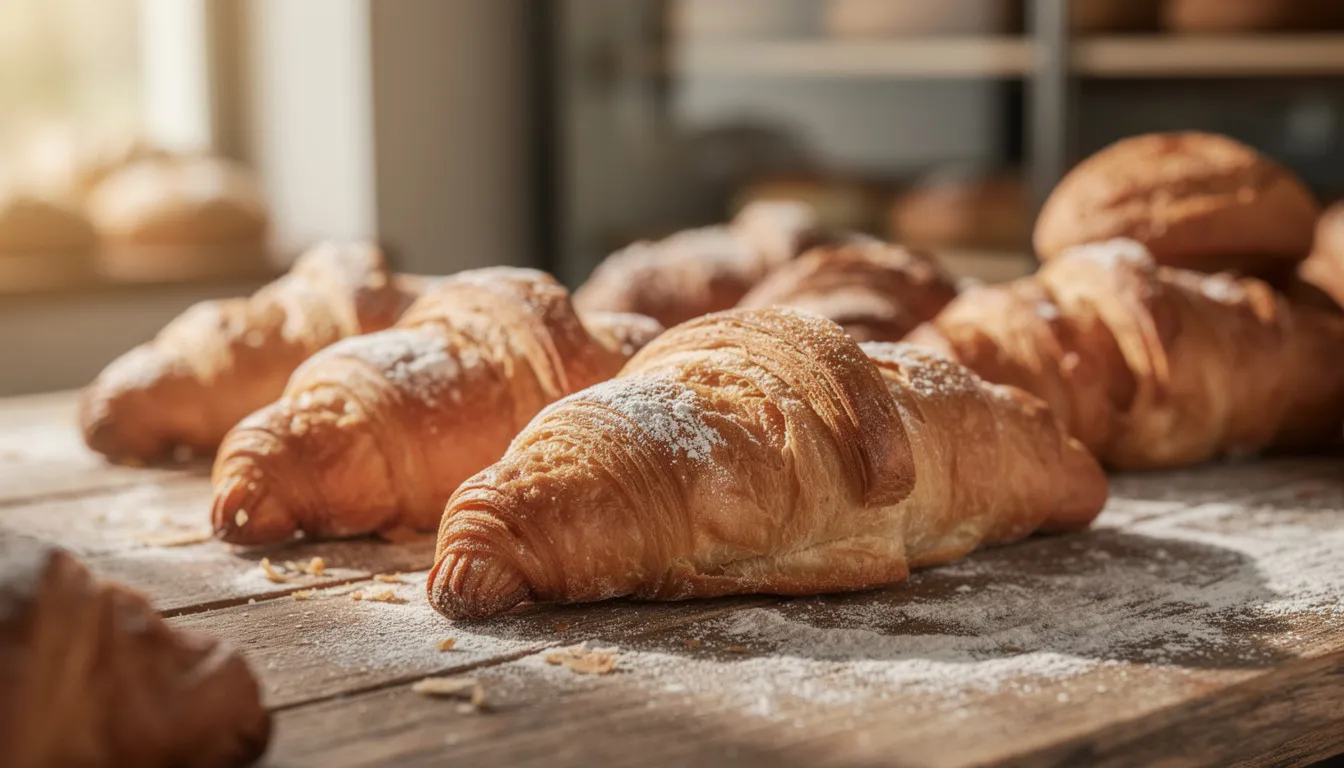
Get your croissants from a neighborhood boulangerie early in the morning - 7 to 10 AM is usually best. Paris has around 1,200 boulangeries, one for every 1200 residents, churning out an estimated 300,000 croissants daily. Keep an eye out for "artisan boulanger" signs if you're after quality.
The must-haves:
Croissant au beurre: flaky, buttery, still warm - the perfect way to start the day
Jambon-beurre: a ham and butter baguette sandwich that's essentially the perfect portable lunch
Pain au chocolat: a chocolate-filled croissant - no explanation needed
Grab a jambon-beurre and grab a seat in the Luxembourg gardens or along the Seine. That's what a Parisian lunch looks like.
Bakeries are clustered in areas like Rue Montorgueil in the 2nd arrondissement, or scattered throughout the 11th. Check ahead of time - Sundays and Mondays often have reduced hours.
Street Crêpes & Bistro Classics
Crêpe stands dot the Seine and Latin Quarter. Try the classics: Nutella, sugar and lemon, or ham and cheese. Around €5 to €8 for a freshly made crêpe eaten on the hoof.
For sit-down crêperies serving buckwheat galettes (the savory ones) with cider, head to Montparnasse. It's still the best place to find authentic crêperies - historically the Breton neighborhood, and still the best spot.
Dish | What It Is | Rough Price |
|---|---|---|
Steak frites | Hanger steak with twice-fried frites, often sauce béarnaise | €20-30 |
Confit de canard | Duck leg slow-cooked in its own fat | €18-28 |
Soupe à l’oignon gratinée | Onion soup with melted cheese crust | €10-15 |
Croque monsieur | Grilled ham and cheese sandwich with béchamel | €12-18 |
For popular bistros, especially Thursday–Saturday nights, book via apps or direct websites. Walking in without a reservation at 20:00 on Friday means waiting or walking away.
Paris offers amazing food at every price point. You don’t need Michelin stars—though if you’re a history buff who appreciates culinary heritage, even simple bistros often have decades of tradition behind them.
For true hidden gems, consider a food tour through neighborhoods only locals frequent, like the backstreets of the 11th or around Belleville market. Or just wander and follow your nose.
How Much Mobile Data You'll Need in Paris
We're going back to this, because it does affect your trip.
Paris is map-happy. The 16 arrondissements spiral out in a pattern that confuses around 60% of first-time visitors. You'll be checking routes, looking up restaurant hours, translating menus - constantly. You'll upload photos, message home, and probably check your bank balance as well.
Realistic weekly usage:
Traveler Type | Weekly Data | What’s Included |
|---|---|---|
Light | 3–5 GB | Maps, messaging, light browsing |
Normal | 10–20 GB | Social media, restaurant research, photo uploads |
Heavy | 50GB+ | Video calls, streaming, remote work, content creation |
Last Things To Think About
Paris will leave you with memories that you just can't rush.
You can tick all the big sights off your list and still miss the magic of the city. The chance discovery of a great little bistro for a lunch that'll stay with you. The way the light catches Place de la Concorde just at 7 in the evening. The conversation you strike up with someone at a wine bar. The moment you find yourself sitting in a cafe for two hours and totally not minding.
Before you go, here are a few things to keep in mind:
Get your phone working first : get your eSIM or SIM card set up before you arrive – trust us, you will need it.
Decide what matters most : you can't see everything, so pick 3 or 4 main sights and let the rest just happen as you wander.
Eat at the right times : lunch is pretty much between 12 and 2, and dinner starts around 7. Don't get caught out outside those hours, as the kitchens will close.
Get lost in the neighborhoods : areas like Le Marais, the Canal Saint-Martin, and Montmartre are where Paris really feels like Paris.
Plan for some time just doing nothing : café time is not an option in Paris, it's essential.
Whether you're heading to the beautiful gardens, searching for a treasure trove of post impressionist art, tracking down the perfect croissant or simply trying to figure out why Paris gets everyone so excited – the answer is the same: slow down.
Start with the big sights, wander the neighborhoods and let Paris surprise you.
And if you've managed to read this far, you're already thinking about Paris the right way. So now go book that trip and make sure your phone doesn’t turn into a useless brick the moment you arrive.
Quick Facts to Enhance Your Paris Trip
The Eiffel Tower sparkles like a diamond with 20,000 bulbs every hour after sunset
The Louvre Museum has an astonishing 380,000 objects on its shelves, with about 35,000 on display
Notre Dame Cathedral was reopened to visitors in December 2024 - what a moment!
The Musée d’Orsay is housed in a former Beaux-Arts train station & features some of the world's most beautiful Impressionist art
You can get to the Palace of Versailles from Paris by train for about €4 each way
Montmartre used to be the stomping ground for artists like Picasso & Toulouse-Lautrec back in the 19th century
The Paris Catacombs hold the remains of an astonishing six million people
The Place des Vosges was built between 1605 & 1612 - it's Paris's oldest planned square
Sainte-Chapelle is a work of art with its 1,113 stained glass scenes depicting all sorts of biblical stories
Walking tours are an absolute must to discover the hidden gems & get your bearings in Paris
Jardin du Luxembourg boasts over 100 statues, a pond, and beautifully manicured gardens - what more could you want?
Paris has an incredible 6,000 cafes where sitting & watching the world go by is part of the experience
The Paris Museum Pass gets you into over 60 museums & monuments at a discounted price - what a deal!
The Seine River cruise docks near Pont d’Iéna, right by the Eiffel Tower
The Arc de Triomphe is situated at the center of a roundabout with 12 radiating avenues - very impressive
The restaurant featured in that TV show "Emily in Paris" is actually Terra Nera in the 5th arrondissement
King Louis XVI met his end during the French Revolution, which was a pivotal moment in Parisian history
The Musée de l'Orangerie has Monet's famous Water Lilies paintings on show in two oval rooms designed just for them
The Place de la Concorde is where King Louis XVI & Marie Antoinette were guillotined during the French Revolution - that's some pretty heavy history




0 Comments
Leave a Comment